
Quick Answer: To dry wet carpet fast, extract water with a wet-dry vacuum, then place high-velocity fans and a dehumidifier in the room. Open windows for airflow, set temperature to 73°F, and lift furniture off the carpet. Most carpets dry in 6-12 hours. Act within 24-48 hours to prevent mold.
Why Drying Your Wet Carpet Quickly is Crucial
A wet carpet is more than just an inconvenience, it’s a race against time. Whether you’re dealing with a spill, flood, or post-cleaning dampness, knowing how to dry wet carpet fast is essential for protecting your home and health.
Here’s the critical fact: mold can start growing under wet carpet in as little as 24-48 hours. Once mold takes hold, you’re looking at potential health hazards, permanent odors, and costly remediation. The good news? With the right approach, you can dry most carpets in 6-12 hours and avoid these problems entirely.
Equipment You’ll Need
Having the right tools makes the difference between a 6-hour dry and a 48-hour disaster. Here’s what professionals use:
- Wet-dry vacuum (Shop-Vac) – Extracts standing water from carpet fibers
- High-velocity fans or air movers – Circulates air across carpet surface
- Dehumidifier – Removes moisture from air (essential in humid climates)
- Clean towels – For blotting and absorbing moisture
- Baking soda – Absorbs moisture and eliminates odors
Equipment Comparison: Drying Time & Cost
| Equipment | Drying Time | Best For | Cost |
|---|---|---|---|
| Wet-Dry Vacuum | 4-8 hours | Standing water | $50-150 |
| High-Velocity Fans | 4-12 hours | Damp carpet | $30-100 |
| Dehumidifier | 6-12 hours | Humid climates | $150-300 |
| Carpet Dryer Rental | 2-6 hours | Severe flooding | $25-50/day |
| Baking Soda | 8-12 hours | Light dampness | $3-5 |
Quick & Effective Methods to Dry a Wet Carpet
1. Use a Wet-Dry Vacuum
A wet-dry vacuum is the fastest way to remove standing water and should always be your first step. It can extract up to 90% of water from carpet fibers.
- Set the vacuum to liquid extraction mode (check your manual)
- Work in slow, overlapping rows across the entire wet area
- Make multiple passes until no more water is being extracted
- Empty the tank frequently, full tanks reduce suction power
Pro Tip: Don’t have a wet-dry vacuum? You can rent one from most hardware stores for $25-40/day. It’s worth it.
2. Increase Airflow & Ventilation
Proper air circulation is critical for fast drying. Here’s how to maximize airflow:
- Open windows and doors to create cross-ventilation (weather permitting)
- Position fans at opposite corners of the room, angled toward the wet carpet
- Use multiple fans if available, more airflow = faster drying
- Run ceiling fans on high if you have them
- Keep fans running continuously until carpet is completely dry
Does opening windows help dry carpet? Yes, opening windows promotes airflow and allows moisture to escape. However, avoid opening windows during rainy or humid weather, as this can introduce more moisture.
3. Use a Dehumidifier
A dehumidifier for wet carpet is especially important in humid climates or basements. It pulls moisture from both the air and carpet, accelerating evaporation.
- Place the dehumidifier in the center of the affected area
- Set it to the lowest humidity setting (30-40%)
- Close windows and doors when using to maximize effectiveness
- Empty the water collection tank regularly
- Combine with fans for best results
Is heat or AC better to dry carpet? Heat is generally better because it increases evaporation. The optimal temperature is around 73°F. AC can help in very humid conditions by removing moisture from the air.
4. Apply Baking Soda to Absorb Moisture
Baking soda is an excellent natural moisture absorber that also neutralizes odors. This method works great for damp carpets or as a finishing step after vacuuming.
- Sprinkle a generous layer of baking soda over the damp carpet
- Work it into the carpet fibers with a soft brush or your hands
- Leave overnight (8-12 hours) for best results
- Vacuum thoroughly to remove all baking soda residue
Why overnight? Baking soda needs time to absorb moisture from deep carpet fibers. A 30-minute application only treats the surface, overnight gives you full absorption and odor elimination.
5. Use Towels & Pressing Method
- Lay clean, dry towels over the wet area.
- Apply pressure (walking over them or using heavy objects) to soak up moisture.
- Replace damp towels with fresh dry ones and repeat.
6. Prevent Mold & Mildew Growth
How quickly can mold grow under wet carpet? Mold can begin growing in as little as 24-48 hours under the right conditions (warmth, moisture, darkness). This is why fast drying is absolutely critical.
- Never leave carpet wet overnight without active drying measures
- Check the carpet padding – if saturated, it may need removal
- Use antimicrobial spray or white vinegar to disinfect after drying
- Lift furniture off carpet to prevent moisture trapping
- Watch for musty odors – a sign mold may be developing
⚠️ Warning: Will a wet carpet dry on its own? Technically yes, but this is a bad idea. Slow drying (24-48+ hours) invites mold growth, permanent odors, and damage to carpet padding and subfloor.
How Long Does It Take for a Carpet to Dry?
Drying time depends on carpet thickness, humidity levels, water volume, and what methods you use:
After Professional Cleaning: 6-12 Hours
Professional carpet cleaners extract most moisture during the cleaning process. With proper ventilation and fans, carpets typically dry within 6-12 hours. You can walk on wet carpet after cleaning, but avoid heavy traffic until completely dry.
After Water Spill: 12-24 Hours
A localized spill, knocked-over glass, pet water bowl, plant overflow, usually dries within 12-24 hours with proper intervention. Key is acting quickly: blot immediately, then deploy fans.
After Flooding: 48-72 Hours (Professional Help Recommended)
Flooding requires aggressive measures. If your carpet has been wet for 3 days or more, mold growth is highly likely and the carpet padding may need replacement. Consider calling professionals for severe water damage.
Summary: Drying Times by Method
| Method | Drying Time | Mold Risk |
|---|---|---|
| Fans + Dehumidifier + Vacuum | 4-8 hours | LOW |
| Fans + Open Windows | 6-12 hours | LOW |
| Dehumidifier Only | 12-24 hours | MEDIUM |
| No Intervention (Air Dry) | 24-48+ hours | HIGH ⚠️ |
How to Dry Carpet Fast in Winter
Drying carpet in winter presents unique challenges: colder temperatures, higher indoor humidity from heating, and limited ability to open windows. Here’s how to handle it:
- Use your HVAC heating: Set thermostat to 73°F, the optimal temperature for carpet drying
- Rely heavily on dehumidifiers: Essential when you can’t open windows for ventilation
- Use portable space heaters carefully: Keep them several feet from carpet to avoid fire hazards
- Run exhaust fans: Bathroom and kitchen exhaust fans help remove moisture from the home
- Avoid hair dryers on carpet: Excessive direct heat can damage carpet fibers
Can a hair dryer dry carpet? While it can help with very small spots, hair dryers aren’t recommended for larger areas. They lack airflow for effective drying and excessive heat can damage carpet fibers.
When to Call Professional Water Extraction Services
Sometimes DIY methods aren’t enough. Consider calling professional water damage restoration if:
- Your carpet has been wet for more than 48 hours
- You notice musty or moldy odors
- The water source was contaminated (sewage, floodwater)
- Large areas are affected (entire rooms or multiple rooms)
- The carpet padding is completely saturated
- You don’t have access to proper drying equipment
- Why is your carpet wet for no reason (potential hidden leak)
Professional water extraction services use industrial-grade equipment, truck-mounted extractors, commercial dehumidifiers, and moisture meters, to ensure complete drying. This is especially important for preventing mold in carpet padding and subfloor.
Need professional help? Our emergency water extraction team is available 24/7. Contact us for fast response.
Frequently Asked Questions
How do you dry a wet carpet fast?
Use a wet-dry vacuum to extract standing water, then increase airflow with fans pointed at the carpet. Open windows for cross-ventilation and run a dehumidifier to pull moisture from the air. Set your thermostat to 73°F and lift all furniture off the carpet. This combination can dry most carpets in 4-12 hours.
Will baking soda help dry a carpet?
Yes! Baking soda absorbs moisture and neutralizes odors. Sprinkle it generously over damp carpet, work it into the fibers, and leave it overnight (8-12 hours) for best results. Vacuum thoroughly to remove the residue.
Can a wet carpet cause mold?
Yes. Mold can begin growing under wet carpet in as little as 24-48 hours under the right conditions. This is why fast drying is critical, leaving carpet wet for extended periods risks mold growth, health hazards, and permanent damage.
Is a dehumidifier good for drying carpets?
Yes! A dehumidifier speeds up drying by pulling moisture from both the air and carpet fibers. It’s especially useful in humid climates or basements. For fastest results, combine with fans and set to 30-40% humidity.
How long does it take to dry carpet with a fan?
Using fans alone, carpet typically dries in 4-12 hours depending on carpet thickness, pile type, humidity levels, and water saturation. Combining fans with a dehumidifier and proper ventilation significantly reduces drying time.
Is heat or AC better to dry carpet?
Heat is generally better because it increases evaporation. The optimal temperature is around 73°F. However, AC can help in very humid conditions by removing moisture from the air. Avoid excessive direct heat (like hair dryers) which can damage carpet fibers.
Will a wet carpet dry on its own?
Technically yes, but this is a bad idea. Without intervention, wet carpet can take 24-48+ hours to dry, more than enough time for mold to start growing. Always use active drying methods (fans, dehumidifiers, extraction) rather than letting carpet air dry naturally.
What soaks up wet carpet?
Clean towels (press firmly to blot), newspapers (layer under furniture legs), and baking soda (sprinkle generously and leave overnight) all absorb moisture effectively. For standing water, a wet-dry vacuum is the most effective extraction method.
Does opening windows help dry carpet?
Yes, opening windows promotes airflow and allows moisture to escape. This is especially effective when combined with fans positioned to create cross-ventilation. However, avoid opening windows during rainy or humid weather, as this can introduce more moisture.
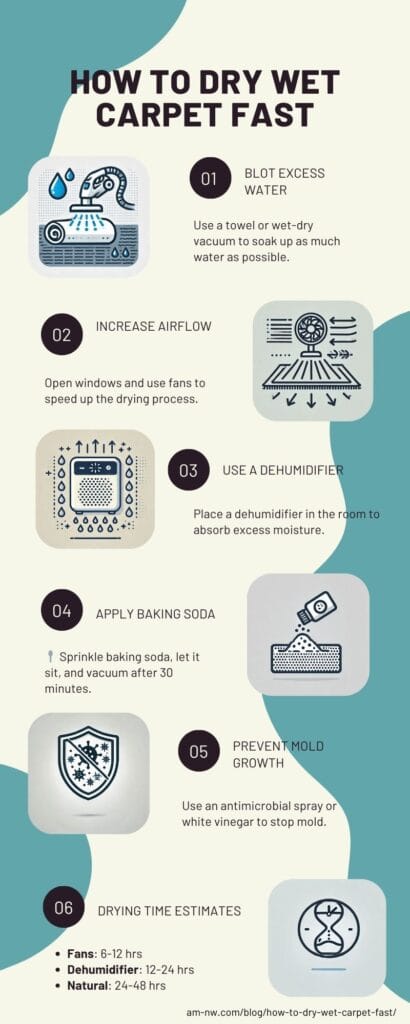
Infographic: How to Dry a Wet Carpet Fast
To make this process easier, we’ve created a step-by-step infographic that you can download and share!
Embed This Infographic on Your Website
Want to share this infographic on your website? Simply copy and paste the following code:
Embed This Infographic on Your Website:
Final Thoughts
Drying wet carpet quickly isn’t just about convenience, it’s about protecting your home from mold, odors, and costly damage. Remember the 24-48 hour rule: that’s how fast mold can start growing. By using the right combination of water extraction, air circulation, and dehumidification, you can dry most carpets in hours rather than days.
Keep essential supplies on hand, wet-dry vacuum (or know where to rent one), fans, and baking soda, so you’re prepared for spills and accidents. And when dealing with severe flooding or water damage, don’t hesitate to call professional our professional cleaning team. The cost of professional drying is far less than replacing carpet, padding, and dealing with mold remediation.